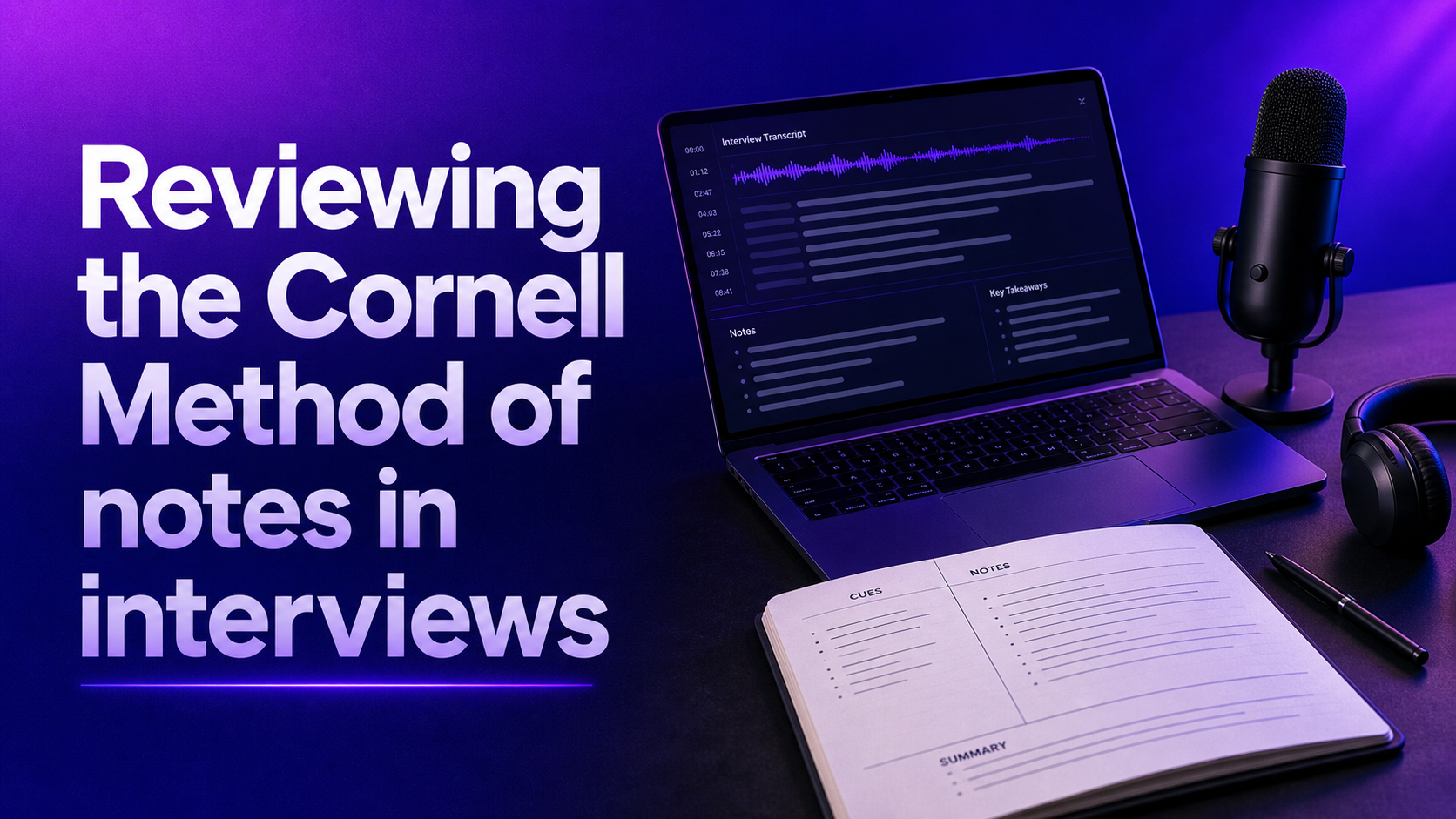



Effective meeting notes frameworks are essential for capturing clear, structured information that drives better decisions and streamlined collaboration, especially in recruitment. By standardizing how notes are taken and organized, teams can save time, reduce bias, and ensure accountability across interviews and meetings.
Many sessions feel unproductive because the documentation was weak. People leave with different interpretations of what was said, what was decided, and who owns the next step.
A structured session creates a consistent account of the conversation. It makes next steps easier. It also improves accountability, because next-step points and conclusions are easier to monitor when they are written in the same layout every time.
In recruitment, this becomes even more important.
Interview writeups are not just a memory aid. They are part of the evaluation process. They support hiring rulings, reduce bias, and help groups compare candidates fairly. If one recruiter writes freeform observations in Google documents and another keeps short bullet points in Word, the result is fragmented feedback and poor calibration.
A consistent session minutes outline helps groups:
A useful outline should be simple enough to use in the moment, but structured enough to create a reliable log. That balance is what makes it practical.
At a minimum, your session annotations framework should cover the core context of the session. This usually means the date, time, participants, session type, and agenda. Without that, even a detailed entry can quickly lose value later.
After the basics, focus on the parts that drive choices and execution.
Start with the information that identifies the session clearly:
Start with the information that identifies the session clearly:
This section matters more than people think. In fast-moving groups, dozens of sessions happen each week. A strong header makes the entry searchable and useful later.
This is the main body of the entry. Maintain it around the agenda, not around random observations.
For example, in an interview, you might organize observations by competency, skill area, or evaluation criteria. In a project session, you might organize them by topic, blocker, and update.
This section deserves its own space in any good session minutes outline.
Groups often bury choices inside the general annotations, which creates confusion later. A separate conclusions section makes it easy to confirm what was agreed, who approved it, and whether further validation is needed.
In recruitment, this can feature:
If your framework does not clearly surface next-step entries, it is incomplete.
Every follow-up entry should answer three questions:
In many hiring flows, these tasks are simple, but every task still needs an owner.
This turns passive writeups into an operational tool. It also prevents the common problem of leaving a session with good intentions but no execution.
This section is especially useful in hiring and cross-functional sessions.
Sometimes the session does not produce a final answer, but it reveals uncertainty. Recording those open points helps the group revisit them intentionally instead of letting them disappear.
In interviews, that might be uncertainty around culture add, leadership depth, or stakeholder alignment. In a board or business meeting, it may be budget risk, timeline risk, or missing data.
There is no single ideal outline for every session. The right choice depends on the goal of the conversation, the level of formality, and how the writeups will be used afterward.
Below are common templates and when they work best.
An informal template is lighter and more flexible. It works well for one-on-ones, internal syncs, recruiter screens, early-stage project meetings, and quick client check-ins.
The format is simpler, but it should still include the essentials: context, main annotations, decisions, and action items.
This is often the best place to start if your team is not yet using a standard framework. It is easy to adopt in Google documents or Word and can be customized as your workflow matures. Some groups start with a free document they can download, while others prefer a quick download of a free sample before customizing it.
This is often the most useful format for operational groups and recruiters.
An outcome-oriented meeting minutes outline is built around outcomes rather than full transcripts. It focuses on what changed, what was decided, and what happens next.
This makes it ideal for:
If speed and follow-through matter most, this template usually delivers the highest value.
For recruitment, a generic meeting template is often not enough. Interviewers need a framework that supports fair evaluation and easy comparison.
A strong interview writeup template should have:
This framework helps groups separate evidence from opinion. It also creates a more reliable record for later decisions.
Here is a simple example you can adapt for most meetings, including interviews, project reviews, and hiring debriefs.
Meeting title:
Date:
Time:
Attendees:
Meeting type:
Agenda:
Summary:
Key discussion points
Decisions made
Action items
| Action item | Owner | Deadline |
|---|---|---|
Next meeting or next step
Candidate:
Role:
Interview stage:
Interviewers:
Competencies assessed:
Evidence captured
Overall observations
Decision
Action items
This kind of template makes comparisons much easier. When every interviewer uses the same entry framework, your team can review candidates side by side without decoding different writeup styles.
The way notes are structured during interviews is often underestimated, yet it is a fundamental tool for clarity and consistency. It not only simplifies comparing candidates but also aligns different stakeholders, making the recruitment process genuinely efficient.
Top recruiters know that crafting and consistently using a personalized note-taking template is as crucial as starting their day with a clear to-do list. This simple habit sharpens focus and transforms the chaos of interview feedback into actionable insights worth paying attention to.
Templates are a strong foundation. But for growing groups, especially in recruitment, the bigger challenge is not only how to create meeting minutes. It is how to make them consistent, searchable, collaborative, and easy to use across the whole hiring workflow.
This is where Liroad becomes highly relevant.
Liroad helps recruiters and hiring teams move beyond static frameworks in Word or Google Docs. It captures and organizes interview and meeting notes in live settings, structures them around your process, and supports customizable frameworks and scorecards that teams can use every day.
That has a real operational impact:
For teams that run many interviews each week, this shift matters. It improves entry quality, but it also improves decision quality.
If you are building or refining your own meeting notes template, start simple. Use a clear structure. Keep decisions and action items visible. Then look at the bigger workflow around those notes.
A good template saves time. A good system saves even more.
And in recruitment, where every interview influences a hiring decision, that structure is not optional. It is part of what makes great recruiters effective every day.
A structured template creates a consistent record, making next-step work easier, improving accountability, and allowing for clearer comparison and communication across team members, especially in recruitment.
It should cover meeting context (title, date, attendees, agenda), key discussion points organized by topics, decisions made, action items with clear ownership and deadlines, and open questions or risks to revisit later.
Formal templates suit official records and compliance, informal ones are flexible for internal syncs, and action-oriented templates focus on outcomes and next steps, making them ideal for fast check-ins in recruiting or client meetings.
Write notes for future readers, capture evidence instead of impressions, separate discussion from decisions, be specific with action items, and use templates to promote consistency and streamline post-meeting next steps.
Blog